Author Archives: An'archives

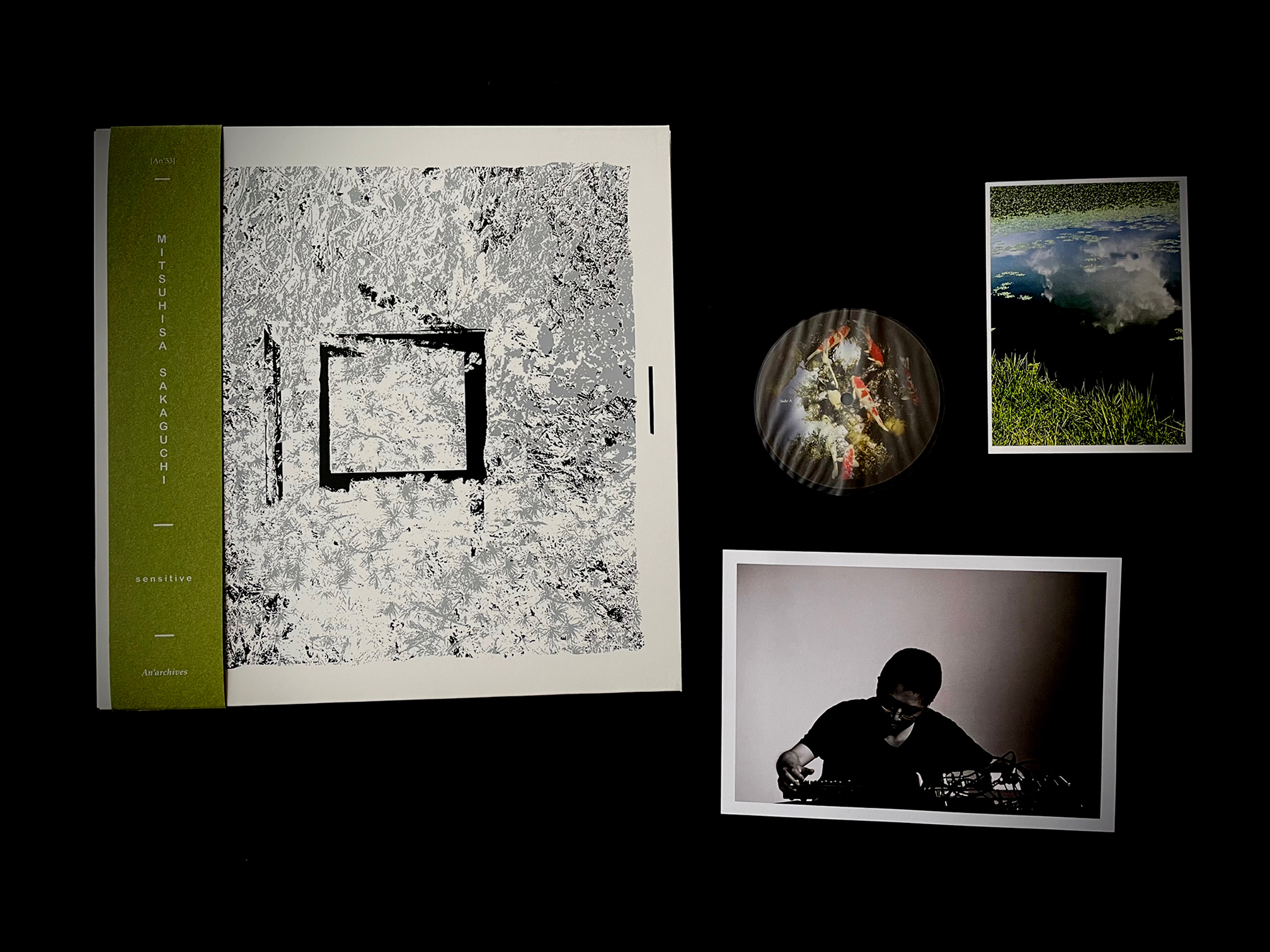
Mitsuhisa Sakaguchi LP

Mitsuhisa Sakaguchi : sensitive – An’archives

LP ltd to 300, black vinyl, 2 color silkscreened jacket with obi (Dark green, dark red & green)

Printed by Alan Sherry

Release date : Dec 12th, 2025

Notes by Jon Dale

Digital on Sakaguchi Bandcamp : https://enjyaqu.bandcamp.com/

You can stream one track there : https://soundcloud.com/user-250085008/metatoxic

An’archives is proud to present [sensitive], a new album, and the first solo vinyl release, by Japanese keyboardist and synth player, Mitsuhisa Sakaguchi. A deftly assembled suite of glistening electronic tonalities, [sensitive] is the latest in a lengthy run of excellent, idiosyncratic albums by Sakaguchi. A low-key yet productive artist, Sakaguchi has released banks of solo titles via his own Bandcamp page, and is also an in-demand improvisor for electronics: see, for example, recent collaborations with Yoshiki Ichihara (TO(R)RI INFRANTA, Ftarri, 2025), Tatsuhisa Yamamoto (non equal mad, self-released, 2020), and the [-] trio with Yamamoto and Uchihashi Kazuhisa (self-titled, Modern Obscure, 2023).

[sensitive] is a startling album for many reasons, not least its rich attention to detail. Sakaguchi’s ear is sensitized to the complexity of electronic sonority, something he’s developed through decades of performance and improvisation, though he’s not limited to that language. “I mainly use multiple synthesizers and process the sounds with effects,” he clarifies, detailing his approach to his music. “I also use a lot of acoustic sounds such as field recordings and percussion; sometimes I also use sounds such as prepared piano.”

Indeed, you can hear this see-sawing balance between the electronic and acoustic written across [sensitive] – see the activated cymbals that twist and stutter through the first half of “metatoxic”, which are soon replaced by a similar stream of burbling synth-flow. The opening “sensitive rot” folds field recordings into Sakaguchi’s electronic kit to such a degree that the differing forms dissolve into each other; on “green shrine”, the field recordings are more present, yet still poetically framed, taken as they are “from the mountains of my hometown, Yawata City, Kyoto,” Sakaguchi explains.

The tender balance achieved by Sakaguchi as he moves between practices, tonalities and temporalities helps manifest the guiding conceptual force behind [sensitive], where Sakaguchi explores a cleansing reverie. “What I wanted to portray with this album was to create an album of sounds that shattered and reassembled my current ‘sense’ and ‘toxins’,” he nods, “along with the ‘nature’ around me. Electronic sounds, our bodies, the environment around us, and nature all blend.”

From there, Sakaguchi attempts a transformation, or transmutation – an alchemical process of exchange. “I am attempting to explore whether it might be possible for the sounds to come closer to each other,” he concludes, “or perhaps even to interchange places.” On the five pieces that comprise [sensitive], you can hear this fusing and exchange. Inhabiting similar spaces as the music of Nuno Canavarro, Asmus Tietchens, Omit, and other like-minded visionaries, [sensitive] traverses curious, quixotic terrain between electronic composition, electro-acoustics, and improvisation.

25€

Delphine Dora & Ayami Suzuki LP

Delphine Dora & Ayami Suzuki LP Kagome Kagome – An’archives

LP ltd to 300, black vinyl, 3 color silkscreened jacket with obi (black dark & blue)

Printed by Alan Sherry

[An’54] Release date : October 10th, 2025

Digital on Ayami Suzuki Bandcamp : https://ayamisuzuki.bandcamp.com/

You can stream one track here : https://soundcloud.com/user-250085008/loiseau-dans-la-cage-taken-from-kagome-kagome-album-on-anarchives

An’archives is proud to present Kagome Kagome, the first collaboration between France’s Delphine Dora and Japan’s Ayami Suzuki. Curious listeners might know Dora from the string of lovely, idiosyncratic albums she’s released over the past two decades, most recently for labels like Modern Love, Morc and Recital; she’s also worked with the likes of Michel Henritzi and Sophie Cooper. Suzuki’s performances, predominantly for voice, place her within a tradition of Japanese improvised music – see the music she’s made with artists such as Takashi Masubuchi, TOMO and Leo Okagawa – but her approach also takes in folk song, ambience and claustrophobic drone.

On Kagome Kagome, Dora and Suzuki play to their many strengths: a gentle, free-willed folksiness; long, aerated drone constructs; ghostly, time-warping explorations for voice. They met on Dora’s May 2024 tour of Japan, though they’d been in touch beforehand, with Dora proposing the collaboration to Suzuki, developed around “concepts of ‘otherworldliness’ and ‘impermanence’,” the latter says, “and explored the relationship between ‘the invisible’ and sound in Japanese culture – a common interest we share.”

They recorded across several days that month, with the sessions for Kagome Kagome taking place in Kanumi, in Tochigi prefecture, at a space named Center. “I was particularly looking forward to seeing Delphine encounter the vintage 104-year-old harmonium from Nippon Gakki Seizo Co. that had just been repaired at Center,” Suzuki recalls. “It was as if the harmonium had been waiting for Delphine to draw sound from it. I felt it was a beautiful relationship where they could guide each other.”

Indeed, there’s something channelled about the music that Dora and Suzuki made together in the session that constitutes Kagome Kagome. Dora’s harmonium might be the spine of the album, but Suzuki’s free-floating voice, and gaseous, muddied banks of electronics, wrap around the wheezing, ancient tonality of the harmonium beautifully – they, too, sound as though they were just waiting to be willed out of the daytime air. Their voices nestle together beautifully – “when we sang together in a tunnel,” Suzuki says, “there were times when we sang the exact same melody without planning. It happened so naturally that the boundaries between us became blurred.”

And that title? It’s drawn from a Japanese children’s song, and the song titles themselves constitute the song’s lyrics, in alternating Japanese (Romanized) and French language. Urban legend connects the song “Kagome Kagome” to the Nikko Toshogu Shrine, nearby Center, that Suzuki and Dora visited while they were in Kanumi. “The mysterious lyrics of ‘Kagome Kagome’ and its puzzle-like connection to Nikko Toshogu were a perfect fit for this mysterious album,” Suzuki reflects, “which I think has its own kind of puzzle-like elements.”

A deep album of prayer and magic, of divination and ritual, Kagome Kagome’s sense of serious play, its rich beauty, feels somehow dislocated from our time. If you’ve ever enjoyed the music of Nico, Kendra Smith, Charalambides, or other channelers of ghostly mystery, its eerie otherness will, somehow, feel oddly familiar.

26€

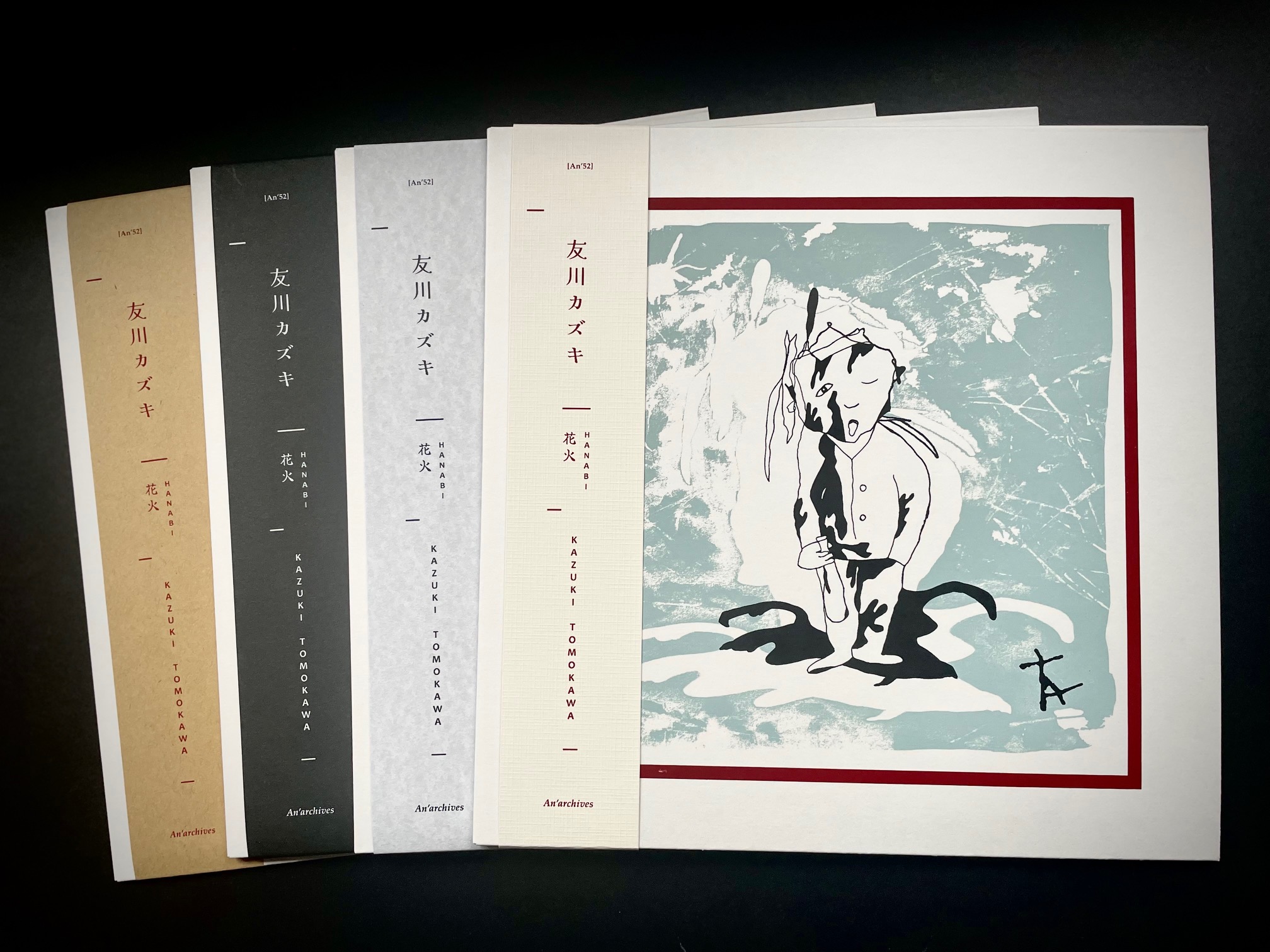
Kazuki Tomokawa LP Hanabi

Kazuki Tomokawa LP Hanabi – An’archives

LP ltd to 550, black vinyl, 3 color (green, red & black) silkscreened jacket with obi (black, tan, clear blue or linen ivory), inserts and envelope with 10 lyrics cards

Liner notes by Michel Henritzi

Printed by Alan Sherry

Release date : October 10th, 2025

No digital, no Bandcamp

An’archives is proud to present Hanabi, a compilation of material from legendary Japanese folk singer, actor and writer, Kazuki Tomokawa. Hanabi draws from Tomokawa’s three most recent albums, Vengeance Bourbon (2014), Gleaming Crayon (2016) and Going To Buy Squid (2024), all released in Japan only on the Modest Launch imprint. Pulling together highlights from these three extraordinary albums, Hanabi collects ten songs of shattering intensity, with Tomokawa performing at an ecstatic peak, a mere six decades into his musical career.

Tomokawa’s life story is one of change, risk and dedication. He appeared on the Japanese folk music circuit in the early 1970s, performing at such significant events as the legendary 1971 Folk Music Jamboree. Over the second half of the decade, he released five stunning albums that cemented his reputation as an expansive, lyrical singer-songwriter and performer whose music jack-knifed between pensive melancholy and righteous fury. His recorded output slowed in the 1980s as he became immersed in theatre, acting and painting, but his connection with the sainted Japanese label P.S.F. led to a prodigious burst of albums across the 1990s and 2000s.

Some of those albums had Tomokawa playing alongside free jazz musicians, such as his long-standing collaborator Toshiaki Ishizuka (Brain Police, Vajra, Cinorama), and late double-bass improviser Motoharu Yoshizawa. Some of that spirit can be found amidst the songs on Hanabi, leavened by a more romantic sensibility on a song like “Night Play”, where Tomokawa’s impassioned vocals and guitar swim and bob amongst a drifting string arrangement. The ferocity of “To The Dead Man” is reinforced by a guest appearance, on saxophone, by upcoming free jazz player Harutaka Mochizuki; the two spar with each other while Hiromichi Sakamoto’s cello and electronics swarm under the surface.

For those who’ve missed the three albums that Tomokawa has released across the past fifteen years – understandably so, given the relative impossibility of finding them outside of Japan – Hanabi is a welcome re-introduction to one of Japan’s most significant, poetic and quixotic folk singers and songwriters. As Michel Henritzi notes in his typically perceptive liner notes, capturing the oneiric and unique spirit of Tomokawa’s song, he is nothing less than “a poet who cries out, opening the darkness and shadows with his song, throwing handfuls of ashes from lives that have fled into the wind, to us, his fellow human beings.”

28€

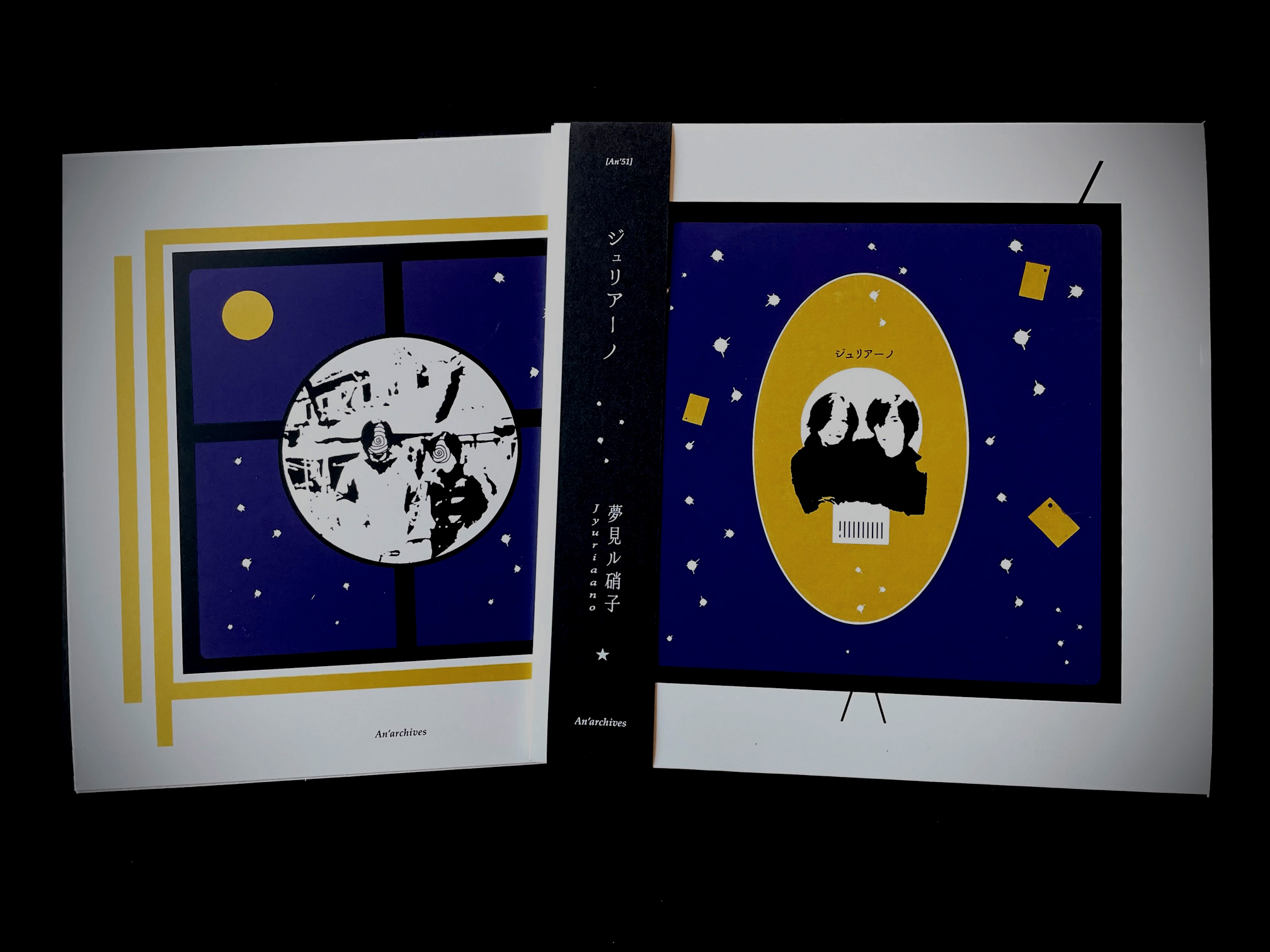
Jyuriaano LP Dreaming Glass

Jyuriaano LP Dreaming Glass

release date : June 20th, 2025

LP ltd to 300, black vinyl, 3 color (gold, purple & black) silkscreened jacket with obi (black, red or salmon), inserts and a postcard, liner notes by Jon Dale, printed by Alan Sherry

DL available on Bandcamp

Contact – wholesale : anarchives@sfr.fr – anarchiveslabel@gmail.com – clerouley@free.fr

Shop in Paris & distribution in France : Souffle Continu

Distribution in UK : World Of Echo

US : Worldgonemad

Home | WORLD GONE MAD DISTRO (bigcartel.com)

An’archives are thrilled to present the debut album by Tokyo avant-pop duo Jyuriaano, Dreaming Glass.

Consisting of Morimoto Ariomi and Cobalt, the two members of Jyuriaano have long histories in Japanese underground music. Morimoto’s history traces back to the late nineties; his nascent interests in noise collage and solo acoustic performance slowly transmuted to group endeavours, and more recently he’s performed with the likes of Akiko Toshimitsu (Usurabi), Maki Miura (Shizuka) and Doronco (Los Doroncos).

Cobalt has released a string of excellent singer-songwriter albums, many on his Poet Portraits label, which has also released material by the likes of Kazumi Nikaido, Place Called Space, Cuthberts, and moools, the latter of which he also performs with on occasion. While Morimoto and Cobalt have known each other for decades, they decided to form Jyuriaano in 2016, and since then have performed at live houses and small bars in Japan, all while slowly working together on their gentle, spirited songs.

The group’s formation story is typically playful – “It all started when we brought an acoustic guitar into the car on a rainy afternoon and started writing songs while eating Japanese sweets,” Cobalt recalls. That sense of play is important to the songs on Dreaming Glass, which vary wildly, from bright, infectious pop songs with a sixties lilt (“Dreaming Baby”, “How Close”), through slinky jazz-pop numbers (“Drawing A Nude”) to melancholy folk laments (“Erica”, “Night Window”). There’s something in Jyuriaano’s collaborative dynamic that gifts Morimoto and Cobalt a particularly open field, when it comes to their creative endeavours.

Some of this might also be down to their listening habits. When asked about their interest in Japanese folk precursors, legendary groups like Folk Crusaders and Itsutsu-no-Akai-Fusen, Cobalt agrees that they have a place in the duo’s listening pantheon, but that’s not where the story ends. “We’ve also listened to commercial folk music outside of those core genres,” he reflects, “We don’t just listen to one genre, but [also] rock and roll, noise industrial, punk, new wave, jazz, chanson, and more.”

You might also hear touches of groups like the forementioned Usurabi, or Maher Shalal Hash Baz, or songwriters like Kazumi Nikaido and Shintaro Sakamoto. But Jyuriaano’s songs, somehow, feel quite sui generis in the way they magic up alternative visions for pop’s possibilities. Dreaming Glass is, quite simply, a lovely, unpretentious joy of an album.

25€

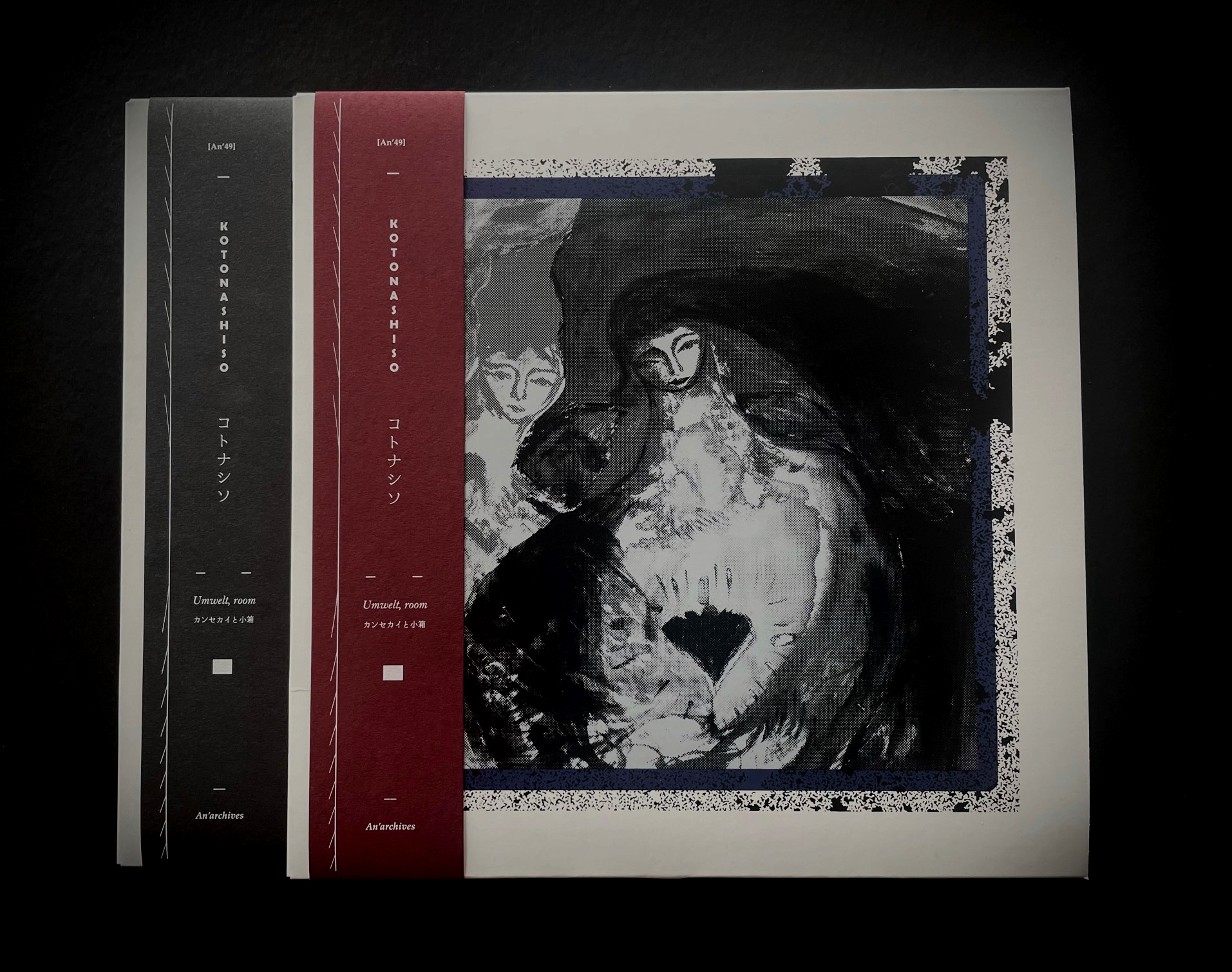
Kotonashiso LP Umwelt, room

Kotonashiso LP Umwelt, room

LP ltd to 300, black vinyl, 2 colors (blue, black & grey) silkscreened jacket with obi (black or dark

red , 2 inserts and a postcard

Label : An’archives Réf : [An’49]

Printed by Alan Sherry, liner notes by Jon Dale

Release date : April 4th, 2025

Contact – wholesale : anarchives@sfr.fr – anarchiveslabel@gmail.com – clerouley@free.fr

Shop in Paris & distribution in France : Souffle Continu

US : Worldgonemad

Home | WORLD GONE MAD DISTRO (bigcartel.com)

With Umwelt, room, An’archives releases the first vinyl LP by Japanese singer, songwriter and guitarist, Kotonashiso. An elegant collection of seven slow-moving, free-ranging song forms, Umwelt, room is reflective, pensive, and yet has a great, expansive sense of movement, each song’s parameters feeling almost infinitely flexible.

Born in Tokyo in 1984, Kotonashiso began playing music in 2000. After taking a long break from making music between the years 2005 to 2016, he returned with renewed focus, and over the past eight years, he’s toured Japan and Europe, performing in venues, street performances and open mic events. Currently, Kotonashiso plays either solo, on in three separate duos, with Sou Mori, 泥, and Hideya Kyooka, respectively. He’s not released much music, as yet – a single, “in the cavern”, with Sou Mori, in 2021, and a soundtrack to Hiroki Nakajima’s solo exhibition, Ray, the following year.All of this gives Umwelt, Room the feeling of a major statement, a debut shot across the void. The seven songs collected here were recorded in 2024, with a guiding principle, for Kotonashiso, being his desire to “[imagine] the time when people started recording blues and folk songs on analog records,” creating a ghost-like presence in the listener’s room. When talking about the songs on Umwelt, Room, Kotonashiso focuses on a number of concepts, such as prayer, tragedy, ‘the cycle of life’, and the disappearance of the gulf between fantasy and reality.

They’re songs with deep, rich resonance, performed without guile. You might be able to hear, at times, the fragility of fellow Japanese singer-songwriter Hisato Higuchi, or the bluesy touch of Loren Connors in the guitar. However, Kotonashiso’s aesthetic remit is wide, identifying with artists like Bill Callahan, Scout Niblett, Inukaze, and Tomoko Shimazaki, and sharing sympathies with “the psychedelic rock, avant-garde and ambient communities.” Ultimately, though, the pellucid, dream-like songs of Kotonashiso, somewhere between folk, pop and blues, sit, disarmed and lovely, within their own universe.

25€

Tête de Chou LP

Tête de Chou LP Tête de Chou (Mark Anderson – Kurumi kido – Arlo Wynks)

LP ltd to 300, black vinyl, 3 colors (greys, silver) silkscreened jacket (chipboard/brown) with obi (Tan or dark brow), insert and a postcard

Réf : [An’50]

Printed by Alan Sherry

Release date : April 4th, 2025

Contact – wholesale : anarchives@sfr.fr – anarchiveslabel@gmail.com – clerouley@free.fr

Shop in Paris & distribution in France : Souffle Continu

US : Worldgonemad

Home | WORLD GONE MAD DISTRO (bigcartel.com)

An’archives are proud to announce the release of the debut album by Tête de Chou, the trio of Mark Anderson, Kurumi Kido, and Arlo Wynks. Some may know Anderson for his membership of Greymouth, 番長Taste, Mysteries Of Love, and Suishou No Fune; Kido and Wynks have more personal musical histories, which informs the intimacy and gently exploratory nature of the eight pieces contained here.

The trio’s movements seem spontaneous and open-ended, which makes sense when you consider the organic way they came together, from drinking at their local yakitori joint, to Anderson and Wynks “mucking around as a duo in the studio on a semi-regular basis,” the former recalls. Kido then joined to form Tête de Chou. She was learning ichigenkin and shō, and when Anderson and Kido organised some small-scale shows in their tatami room, "extending that to us [three] making a bit of a freeform racket wasn’t a stretch,” says Anderson.The album itself was predominantly built from material drawn from two recording sessions, one each in Japan and New Zealand. These tracks were further augmented by several long-distance collaborations. Anderson reflects that, as Wynks was on the road, the album “almost ended up a bit of a travel diary for him.”Wynks recalls the exchange flowed both ways: “Mark and Kurumi sent me recordings that I added things to and/or added to pre-existing things to create a few more tracks.”That might explain the mobile terrain covered by the album. It’s an album of snapshots, at once vivid in their performance, and obscure in their methodology.Organ drones tussle with field recordings; thin streams of noise rub up against clanking metallics; whispering, wistful reeds drift alongside warping strings and a tickling glockenspiel. There’s a fair breadth to the instrumentation here: in addition to what’s already mentioned, you can add microphone, mini-amp, dulcimer, guitar,shehnai, violin, and ‘two-stringed goatophone’.Placed together, the eight pieces here form an elliptical narrative that’s far from easy to pin down, but infinitely pleasurable to listen to, a kind of home-built, humble electro-acoustic pastorale, and an impressive, unexpected first shot across the bow.

25€

Andrew Chalk LP Dioramas

Andrew Chalk LP Dioramas

LP ltd to 350, black vinyl, 180g, offset jacket with obi, large insert and a postcard
Label : An’archives
Réf : [An’47]
Release date : January 24th, 2025

On Andrew Chalk’s new album for An’archives, Dioramas, he returns to the art of the
miniaturist, after the long-form exploration of 2024’s Songs Of The Sea. It’s an
appropriate mode of address given the title – each of these fifteen pieces indeed
feels like a replica of a specific scene, rendered in miniature. As with much of
Chalk’s music, they set out to explore humble terrain, a thread of melody in slow
motion, or a weave of texture, sometimes in aquatic repose, moving like slow tides.
There’s a becalmed warmth to much of Dioramas, along with some curious
developments: a pronounced folksy lilt to the melody that’s turned over and over, like
a jewel slowly spinning on a dial, in “The Carrach”; the lush churchiness of the organ
in the hymnal “The Changes”; the stretched strings that quiver and whisper on the
closing “Lonely House”. These subtle changes can seem profound at first blush, but
they simply highlight aspects of Chalk’s music that we sometimes miss; they
eventually settle into the scenery.

SOLD OUT

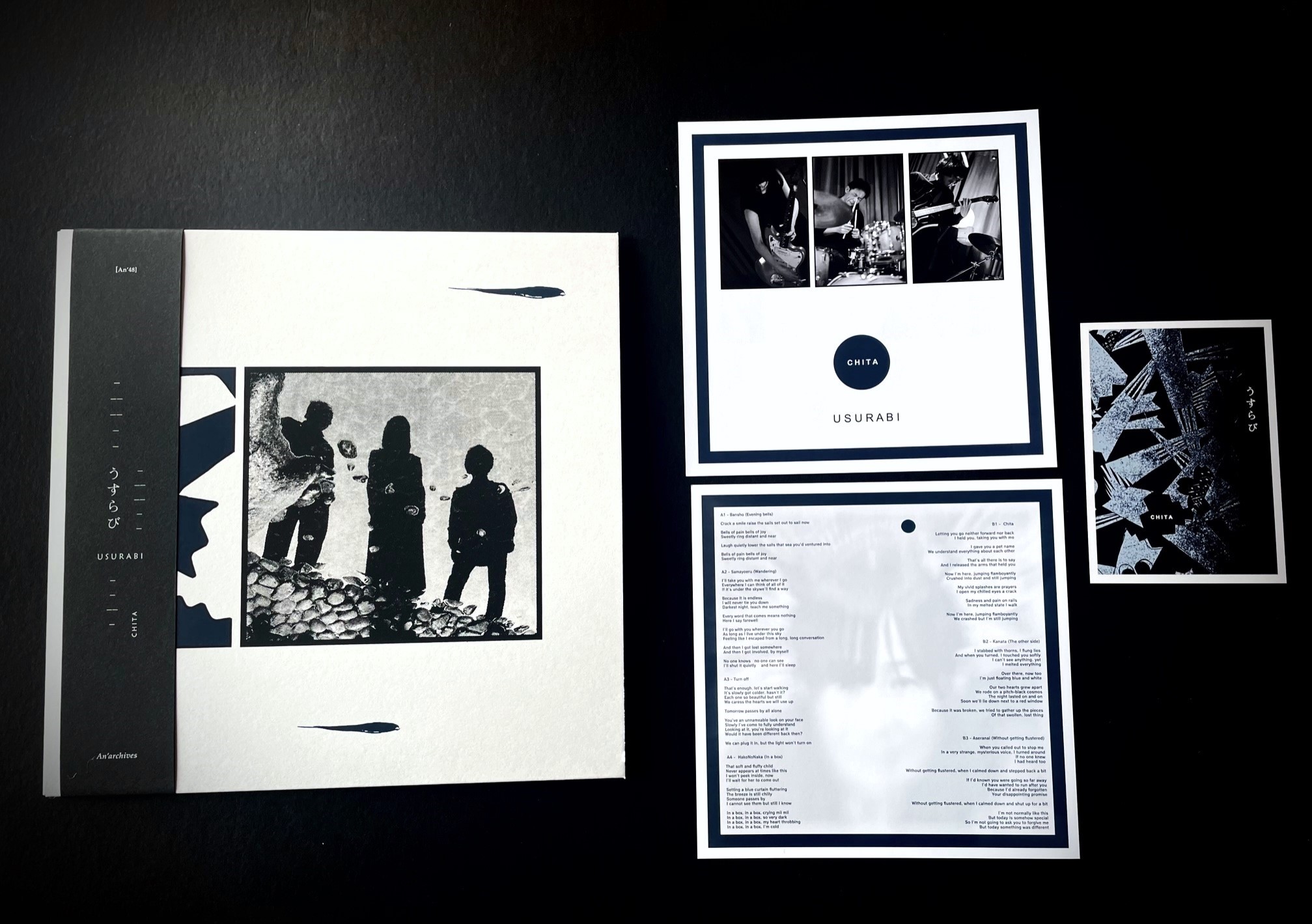
Usurabi LP Chita

Release date : Oct 4th, 2024

Usurabi LP Chita

LP ltd to 415, black vinyl, 2 color (blue and black) silkscreened jacket with obi (black or light grey), 2 inserts and a postcard
Réf : [An’48]
Printed by Alan Sherry 
Photos by Akiyama Noriko 
Chita, the third album proper by Japanese guitar pop trio Usurabi, is their most elegant, stylish confection yet. Over the past four years, Toshimitsu Akiko (vocals, guitar), Kawaguchi Masami (bass) and Morohashi Shigeki (drums) have been recording, playing live, and releasing songs of rare melodic warmth, centring Toshimitsu’s unique musical vision, where melancholy and joy can co-exist, a split-second flick of her wrist switchblading the guitar from languorous sweetness to overloaded rock action.

Chita expands on the smartly sculpted pop and rock songs found on their previous albums, Remains Of The Light (2021) and Outside Of The World (2023), while infusing the music with more of the rough-housing energy that also coursed through the live CD, Once In A Red Room, they self-released in January 2024. There’s still a through-line, of course, that connects the music here to Toshimitsu’s earlier groups, Doodles and Animone, ,but Chita feels more deeply like a sussed, sharp take on the crumbling edges of sixties psychedelic folk and rock: the harmonica that blasts through the opener, “Bansho”, is pure Dylan in effect.

One of the many smart things about Usurabi, though, is that they never feel beholden to the historical moment. Soon after “Bansho”, we encounter “TurnOff”, a lush pop song that turns on a dime, with Toshimitsu tearing fuzztone notes from six strings that are like a more folk-reverent Kaneko Jutok. And there’s something about the guitar and bass riff that doubles through the thrilling two-and-a-half minutes of “Hakanonaka” that’s a dead ringer for the Only Ones. Flip the record, and things get more expansive, the spindly jangling of the title song spiralling ever inwards, before the sweet, sugary rush of “Kanata” resolves to the martial rhythms that pulse through “Aseranai”, winding the album down to its poetic, becalmed resolution.

Distribution in UK : This Ain’t Distribution / Japan Blues

Shop in Paris & distribution in France : Souffle Continu 

US : Worldgonemad

25€

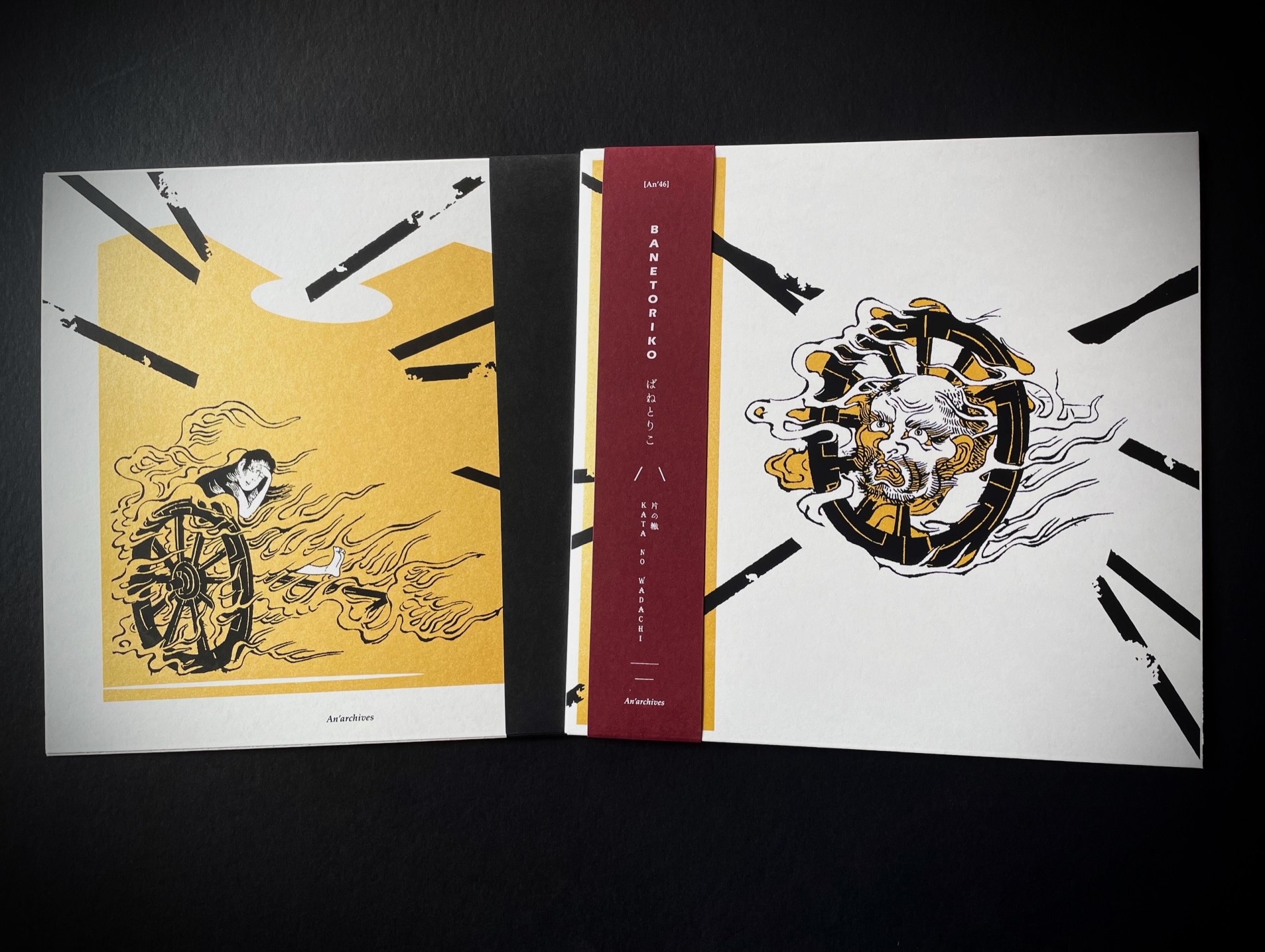
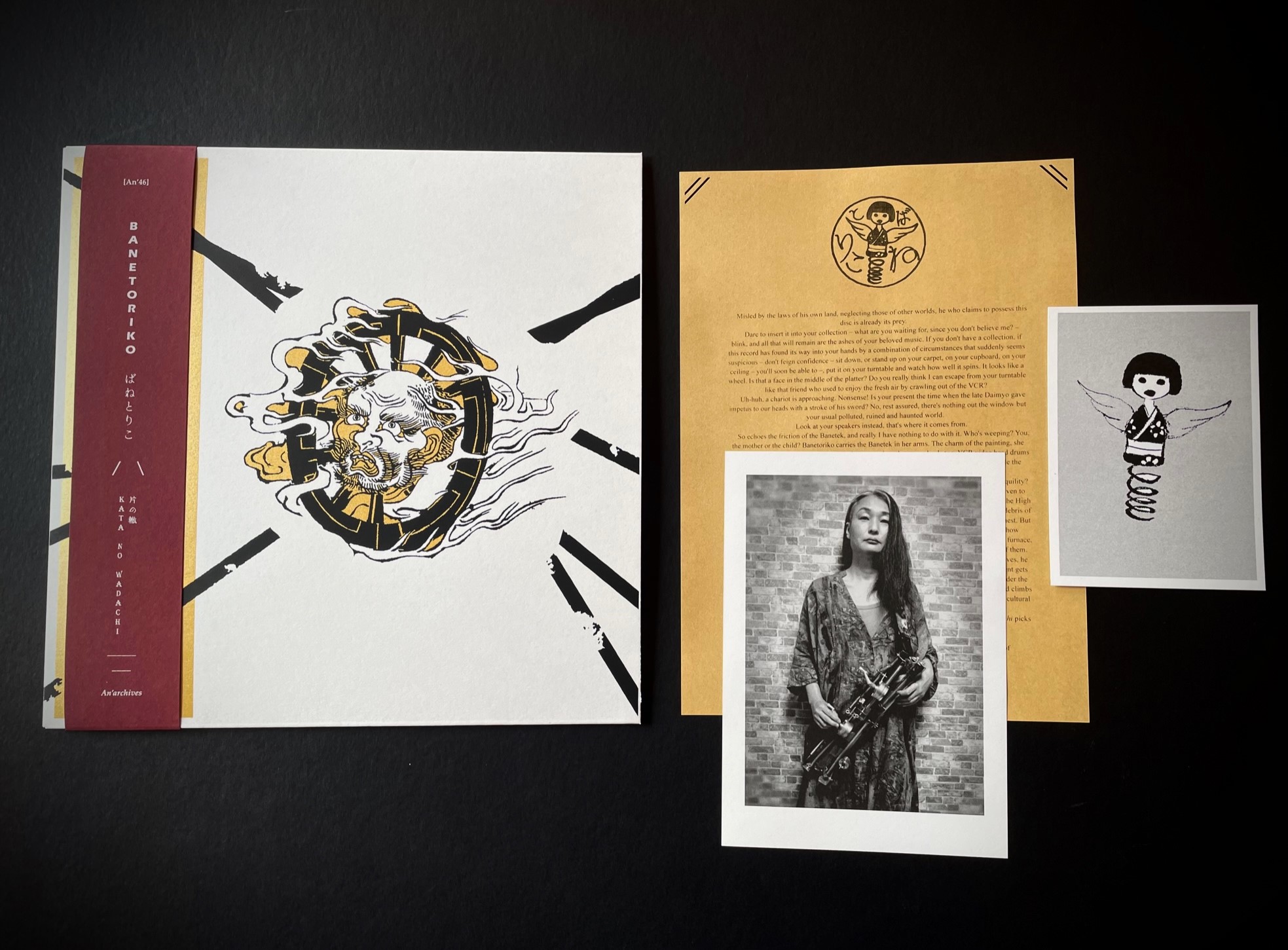
Banetoriko LP

Banetoriko LP /DL Kata No Wadachi

LP ltd to 315, black vinyl, 2 color  (gold and black) silkscreened jacket with obi (black or paver red), inserts and a postcard

Liner notes by Aurélien Rossanino

Printed by Alan Sherry

Release date : May 31st,  2024

Kata No Wadachi is the latest album by Banetoriko, the solo noise project of Tamaki Ueda. Her first release both on An’archives and on vinyl, it follows several albums for the Neurec imprint – 2017’s Beside the Sluice and 2022’s Yorioto Hogiokuri – and several other cassettes and CD-Rs. With Kata No Wadachi, the Banetoriko world, inspired by the Yokai (“strange apparitions” – supernatural figures, ghosts, spirits) of Japanese folklore, is at its most resonant yet.

Recorded across 2022 and 2023, the three tracks on Kata No Wadachi have Ueda performing in a particularly elevated manner. Her sound is highly tactile and grittily sensuous, the better to capture the ritualistic repetitions, and hypnotic methodologies, core to Banetoriko. The scrape and scratch of Ueda’s self-made metal instrument, the Banetek, gives these improvisations a unique throb, even as their mood, of introverted focus and elaboration of minutiae, gestures towards broader histories of noise and abstract art. Kata No Wadachi evokes, to some degree, the urban ritual noise of the likes of The New Blockaders, Organum, or Ferial Confine; elsewhere, the abraded, rough-housing textures bring to mind the eighties tape works of Hands To and John Hudak.

Ueda embraces the dream evocation that’s possible when loops of blurred texture collide with the gnaw and groan of energised metal, while mantric, dissociated vocals, and the oppressive weight of deep breath, gather around these compositions like a ghost’s shroud. While she’s been making noise for some time, since the nineties, Banetoriko was formalised as a project in 2011, while Ueda lived in Los Angeles. Relocating to Osaka in 2021, she’s carved out an utterly unique space for herself in Japanese noise, and her music contains an absolutely elemental vibration. Framed beautifully with poetic liner notes by Aurélien Rossanino, Kata No Wadachi is an oppressive, yet quixotically blissful trip.

25€

Harutaka Mochizuki LP

Harutaka Mochizuki LP Doppelgänger ga boku wo

LP ltd to 315, black vinyl, color  (blue, red & grey) silkscreened jacket with obi (black or grey), inserts and a postcard

Liner notes by Michel Henritzi

Printed by Alan Sherry

Release date : May 31st,  2024

An’archives is proud to present the latest album by Japanese free saxophonist and vocalist Harutaka Mochizuki, Doppelgänger ga boku wo. Since the early 2000s, Harutaka has quietly, yet steadily, released a string of solo and collaborative releases that have allowed multiple perspectives on one of the most singular voices in modern music. In collaboration, he seems to prefer the duo format, and digging through his discography, you’ll find releases where he pairs with Tomoyuki Aoki (of Up-Tight), Michel Henritzi, and Hideaki Kondo. But Harutaka’s solo performances, with their lyricism and physicality, are where the magic truly happens.

If earlier albums, like Solo Document 2004 (Bishop, 2005) and Pas (no label, 2014), were raw documentations of solo alto saxophone performances, in recent years, Harutaka’s solo albums have become more complex, more mystifying. Most significantly, they’ve become more personal; there are few musicians extant whose albums feel quite so much like diaristic interventions, and Harutaka’s music now is deeply moving in its intimacy. Developing that thread of revelation, Doppelgänger ga boku wo offers a still richer exploration of many facets of Harutaka’s artistry.

The two double-tracked alto saxophone performances here feel consummate, with Harutaka shadowing himself, exploring the possibilities of the multiple self: Doppelgänger is me, indeed. The playing here is rich with affect, but still exploratory, voiced with rigour and intent. Two short pieces for keyboard and voice (about Giacometti and Genêt, respectively) are fragile miniatures, with clusters of chords, and passing phrases, wrapping around Harutaka’s untutored but lovely singing.

The ‘karaoke’ performance that closes the album, of “Woman ‘W no higeki’ yori”, speaks to the iterative aspects of Harutaka’s music. A cover of the Hiroki Yakushimaru song, the theme to Shinichirō Sawai’s 1984 film W’s Tragedy, he’s returned to this song several times, and here, his delivery perfectly captures the spirit of what Michel Henritzi, in his typically beautiful liner notes, evocatively details as “one of those sad love songs that accompany lonely sake drinkers in smoky night bars, sharing their spleen.”

Gorgeous, human, heartrending – Doppelgänger ga boku wo is Harutaka Mochizuki in element and in spirit.

25€